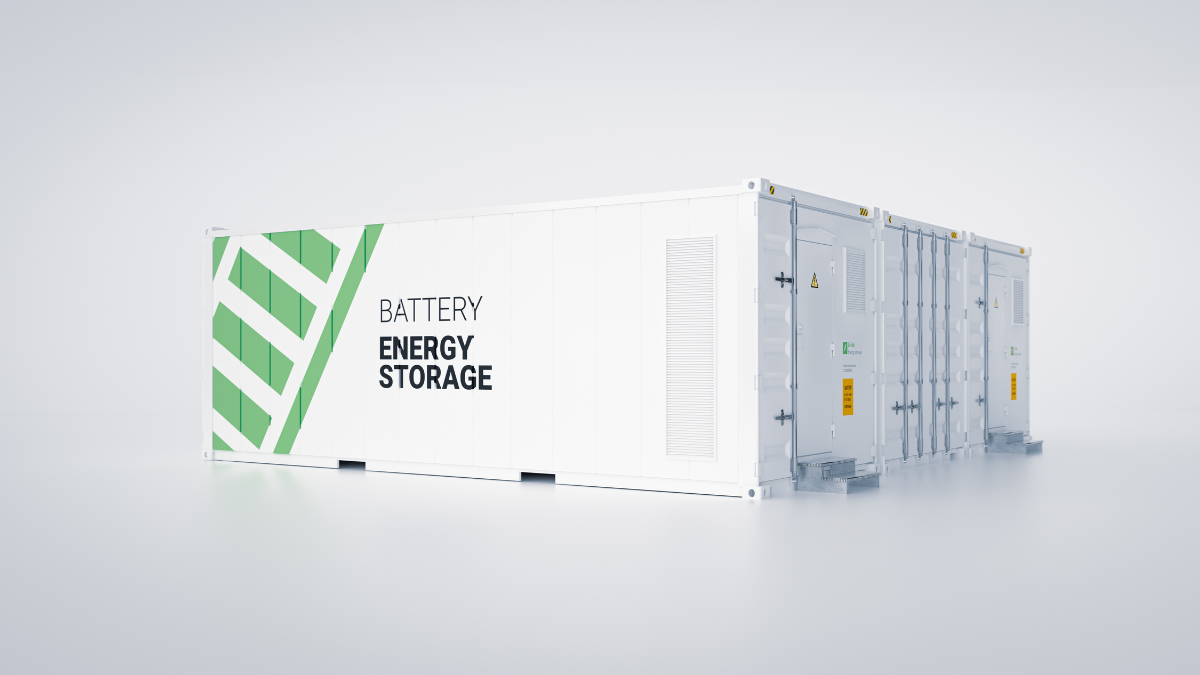
Introduction: Energy Storage Transforms from "Backup" to "Grid Pillar"
Energy storage is undergoing a fundamental transformation—evolving from a passive backup solution to an active grid participant that shapes power system operations. At the 2026 Energy Storage International Exhibition (ESIE) in Beijing, Wood Mackenzie analysts highlighted three game-changing trends reshaping how we design, deploy, and utilize battery energy storage systems (BESS): larger battery cells, modular architecture, and system-level innovations like grid-forming capabilities. These advancements are not just technical upgrades—they're unlocking new use cases, improving operational efficiency, and accelerating the global energy transition.
🧩 Modular Design: The Building Blocks of Flexible Storage
Modular energy storage systems are becoming the industry standard, replacing traditional monolithic designs with scalable, plug-and-play components. This shift addresses two critical challenges:
Rapid deployment: Modular systems reduce installation time by 40-50%, enabling utilities and businesses to respond quickly to grid needs
Easy maintenance: Individual modules can be replaced without shutting down the entire system, minimizing downtime and operational costs
Customizable capacity: Users can start small and expand as energy needs grow, making storage accessible to small businesses and residential customers alike
Wood Mackenzie forecasts that by 2030, 90% of new energy storage installations will feature modular design, driven by cost reductions and increased demand for flexible deployment options. This trend is particularly evident in commercial and industrial (C&I) applications, where businesses are leveraging modular systems to:
Optimize energy costs through peak shaving and demand response
Ensure uninterrupted operations during grid outages
Participate in grid services markets for additional revenue streams
⚡ Grid-Forming Batteries: Mimicking Traditional Power Plants
One of the most significant innovations in energy storage operation is grid-forming capability—a technology that allows batteries to actively regulate voltage and frequency, effectively mimicking the behavior of traditional fossil fuel power plants. Unlike conventional grid-following systems that only respond to grid signals, grid-forming batteries can:
表格
Capability Grid-Following Grid-Forming
Voltage control Reactive Active
Frequency regulation Responsive Proactive
Black start capability No Yes
Island operation Limited Full
This shift is gaining regulatory momentum, with both the European Union and United States expected to make grid-forming functionality a requirement for new energy storage projects by 2028. The technology is particularly valuable in:
Remote areas with weak grid infrastructure
Microgrids powering critical facilities like hospitals and data centers
High-renewable penetration regions where grid stability is challenged by intermittent generation
🔌 High-Voltage Cascading: Efficiency Redefined
High-voltage cascading technology is another breakthrough transforming energy storage operations, enabling direct connection to medium-voltage busbars without transformers. This innovation delivers:
92%+ system efficiency: A significant improvement over traditional transformer-dependent systems (85-88%)
Reduced footprint: Smaller equipment requirements save valuable space in urban and industrial settings
Lower lifecycle costs: Fewer components mean less maintenance and longer system lifespan
The technology is already being adopted in large-scale utility projects, with China leading the way in deployment. In 2026, over 30% of new utility-scale storage installations in China will feature high-voltage cascading systems, according to Wood Mackenzie data.
🏢 Real-World Applications: How These Innovations Are Being Used Today
These technological advancements are translating into tangible benefits across various use cases:
1. Commercial & Industrial (C&I) Storage
A mid-sized manufacturing facility in Texas recently deployed a 5 MW/10 MWh modular grid-forming storage system, achieving:
35% reduction in peak demand charges
Ability to operate independently during grid outages for up to 8 hours
$200,000+ annual revenue from grid services participation
2. Data Center Backup & Grid Services
Major tech companies like Google and Microsoft are integrating grid-forming batteries into their data center infrastructure to:
Ensure 100% uptime for critical operations
Optimize energy consumption across multiple facilities
Generate additional revenue through demand response programs
3. Rural Electrification
In sub-Saharan Africa, modular high-voltage cascading systems are powering remote villages, providing:
Reliable electricity for homes, schools, and healthcare clinics
Integration with local solar generation to reduce diesel dependency
Scalable capacity to meet growing energy demands
🔮 Future Outlook: Energy Storage as the Grid's "Digital Backbone"
Looking ahead, Wood Mackenzie predicts these innovations will drive a 45% increase in global energy storage deployment by 2028, with grid-forming capabilities becoming standard across all market segments. The convergence of modular design, grid-forming technology, and high-voltage efficiency will:
Make energy storage more accessible and cost-effective for a wider range of users
Accelerate the integration of renewable energy sources into global power grids
Create new revenue streams for storage owners through advanced grid services
Enhance grid resilience in the face of climate change and extreme weather events
As energy storage systems become smarter, more flexible, and more efficient, they're not just storing energy—they're redefining how we generate, distribute, and consume power in the 21st century.
Grid-Forming Batteries & Modular Design: Energy Storage's New Era of Power Grid Integration 2026
Discover how grid-forming batteries, modular design, and high-voltage cascading tech are transforming energy storage use cases for grid stability, commercial backup, and renewable integration in 2026.