The energy storage industry in 2026 is no longer a fledgling sector but a trillion-dollar battlefield where the rules of the game are being rewritten. Q1 financial reports have laid bare a landscape of "booming demand amid lingering price war scars" – while total energy storage battery sales surged 111.8% YoY to 145.1 GWh in China , the industry is undergoing a fundamental shift from "capacity competition" to "value-driven innovation." As a senior product manager with deep market and customer insights, I've identified three game-changing trends that will separate winners from losers in the next 18 months.
1. AIDC Energy Storage: The Hottest New Frontier Redefining Power Infrastructure
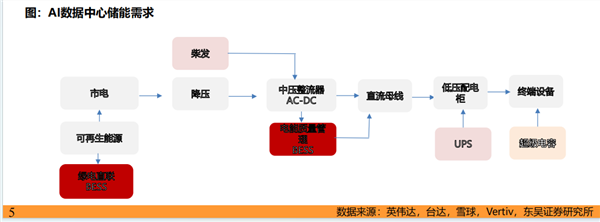
The most transformative development of 2026 is the explosive rise of AIDC (AI Data Center) energy storage – a sector that has turned from a niche application to the "holy grail" of the industry . At the ESIE 2026 exhibition in April, every major player from CATL to BYD showcased data center-specific energy storage solutions, signaling a collective pivot toward this high-value segment .
What's driving this shift? The insatiable power hunger of AI training clusters. A single advanced AI data center now consumes 10-50x more electricity than traditional data centers, turning energy storage from a "backup accessory" to a "mission-critical infrastructure" . Industry forecasts predict that by 2030, AI data centers will account for over 10% of global electricity consumption, with China's market growing at a 40%+ CAGR .
For product managers, this trend demands a complete rethinking of customer needs:
Zero tolerance for safety incidents: Data centers cannot afford any thermal runaway risks
Millisecond-level response times: Critical for maintaining AI operation continuity
Lifecycle cost optimization: AIDC operators prioritize TCO over upfront capital expenditure
Green energy integration: China mandates 80%+ renewable energy consumption for new large data centers by 2030
"The companies that merely stack cells in standard containers won't even get a foot in the door of this high-margin market," notes an industry veteran at CATL . Success requires system-level innovation combining power electronics, electrochemistry, and AI thermal management .
2. Solid-State & Sodium-Ion: Multi-Technology Era Arrives in Energy Storage
2026 marks the "year of multi-path technological explosion" in energy storage, with solid-state and sodium-ion batteries leading the charge . After years of laboratory development, these technologies are finally moving into commercial deployment, addressing long-standing pain points in the industry.
Solid-State Batteries: Safety First for Critical Applications
While solid-state batteries have been discussed in EV circles for years, their true value shines in energy storage where safety concerns are magnified . A single 100MWh storage station near urban areas or renewable energy bases cannot afford thermal runaway incidents, making solid-state's inherent safety advantages a game-changer .
Key breakthroughs in 2026:
Semi-solid batteries already deployed in projects across Xinjiang, Shandong, and Guangdong
95% reduction in lithium dendrite penetration risk compared to liquid electrolyte batteries
100°C+ increase in electrolyte flash point for enhanced thermal stability
Despite 2-3x higher costs than LFP systems, solid-state is finding traction in high-security scenarios like data centers and underground storage facilities where operators are willing to pay a premium for "absolute safety" .
Sodium-Ion: The Cost-Efficiency Champion
With lithium prices rebounding from recent lows, sodium-ion batteries have reclaimed their position as the low-cost alternative . CATL's "Naxin II" sodium battery, launched in April 2026, secured a landmark 3-year, 60GWh order with Haibo Sichuang, marking the beginning of large-scale commercialization in energy storage .
Sodium-ion advantages:
Abundant resources: Sodium reserves are hundreds of times greater than lithium
Superior low-temperature performance: Maintains >90% capacity at -20°C
Enhanced safety: Reduced fire and explosion risks
Lower costs: Targeting $50/kWh at scale, compared to $80-100/kWh for LFP
3. The Great Separation: New Core Competencies Redefine Industry Hierarchy
The era of simply ramping up production capacity is over. As system prices stabilize around $0.07/Wh and cell prices hover at $0.05/Wh, the industry is experiencing a "great separation" where new core competencies determine survival :
表格
Old Competitive Factors New Core Competencies
Production volume Ultra-efficient manufacturing: 99%+ yields to squeeze out marginal profits
Cell performance System integration & software definition: AI-powered energy management systems that enable grid market participation
Domestic sales scale Global compliance & localized delivery: Supply chain traceability, carbon footprint tracking, and regional production networks
Single technology focus Multi-technology platform capabilities: Combining solid-state, sodium-ion, flow batteries, and flywheels for different scenarios
What This Means for Product Managers and Businesses
For senior product managers, the 2026 energy storage landscape demands a shift from "feature-focused development" to "scenario-driven innovation":
Customer segmentation must be hyper-specific: Differentiate between AIDC operators, utility companies, industrial users, and residential customers – each has unique safety, performance, and cost priorities
Technology agnosticism is key: Develop modular platforms that can accommodate multiple battery chemistries and system architectures as market needs evolve
Total Cost of Ownership (TCO) is the new price war: Focus on reducing lifecycle costs through longer warranties, predictive maintenance, and energy arbitrage optimization rather than just cutting upfront prices
Global-local balance is non-negotiable: Build supply chains that can navigate geopolitical tensions while meeting regional compliance requirements in the US, EU, and Asia-Pacific
The energy storage industry in 2026 is at a crossroads. While the applause for its trillion-dollar potential is deafening, the anxiety of navigating technological disruptions and market shifts is equally palpable . For companies and product leaders who can adapt to these new rules, the next chapter promises unprecedented growth. For those clinging to outdated strategies, the game may soon be over.
Energy Storage Industry 2026: AIDC Boom, Solid-State Breakthroughs, and the Great Separation of Winners and Losers
Discover 2026's transformative energy storage trends: AIDC power infrastructure, solid-state/sodium-ion commercialization, and core competency shifts separating winners from losers.